
Listen to 350+ interviews on philanthropy, sustainability and social entrepreneurship. Guests include Paul Polman, David Lynch, Siya Kolisi, Cherie Blair, Chiwetel Ejiofor, Bob Moritz, David Miliband and Julia Gillard. Hosted by Alberto Lidji, Visiting Professor at Strathclyde Business School and ex-Global CEO of the Novak Djokovic Foundation. Visit Lidji.org for more information.
Episodes

Monday May 06, 2019
Monday May 06, 2019
CEO of the Sutton Trust, James Turner, joins Alberto Lidji to discuss their work in improving social mobility and tackling inequality in the UK.
The Sutton Trust was founded in 1997 and is focused on improving education, social mobility and fighting inequality. They have a wide portfolio of research and program activity, focused on children from their very early years all the way up to young adults in university, workplace and access to the professions.
The Sutton Trust differs from many others by combining research and policy advocacy work alongside practical programmatic work. These two aspects build on each other and help inform and establish credibility. The Sutton Trust reach circa 6,000 people each year, and through policy and working with government they have a much bigger impact beyond that.
They’re particularly interested in social mobility on the high end; looking at who are the future leaders in society and who are taking the top jobs, the most prestigious and influential jobs. This is because the people in these strata of society have such an impact on society that it really matters that they are representative of society at large, as opposed to representing the wealthy and affluent.
It’s important not only to support research into these policy areas but also to put effort into ensuring this research gets strong coverage in the media, since this helps get policymakers interested and engaged. The Sutton Trust have never been afraid to ruffle feathers or be controversial or provocative when necessary.
When James got into this space, the term ‘social mobility’ was very much a technical term, used almost exclusively within academia. It is only more recently, since the early 2000s, that it has entered mainstream discourse and, now, it has really become much more prevalent and visible in government strategy documents and press releases – even to the point where it now almost suffers from being used too much.
Intergenerational mobility and transfer of poverty: James notes there is a broadly embraced view that social mobility in the UK is not as high as it should be and it’s not as high as in other countries. Education is a key driver for this and what one’s parents do, how much they earn, what occupation they have, unfortunately, has a big bearing on what their children go on to do.
James notes there’s a bit of an arms race in social mobility. Education is such a currency that, understandably, well off parents do all they can to give their young people an advantage, so it’s getting harder for the state to compensate against that.
The Sutton Trust has been charting the rise of paid-for private tuition. How much your parents earn dictates a lot what school you go to; on top of this you have a burgeoning private tuition market, which further accentuates this advantage; and now you see this in tertiary education as well – where more and more students are getting degrees – so it’s now about ‘have you obtained a master’s degree, have you obtained a PhD, have you done an internship?’ So, the barriers are increasing.
Besides the educational attainment angle, the Sutton Trust has a strong interest in the aspirational and guidance piece so that young people are informed on all the career choices and educational opportunities at their disposal.
The advice and guidance teachers give is crucial. Many young people don’t submit applications to some of the top universities because of misperceptions, or because some teachers may not advise their students to apply to some of these top universities for fears they may not fit in – fears which are often unfounded.
Part of the challenge is in getting students to submit an application in the first place. James observes that many of the students from disadvantaged backgrounds who end up going to top universities tend to do just as well as their peers and thrive in those environments.
Yes, it can be overwhelming to go to Oxford University or Cambridge University if you’ve come from an inner-city state school, so part of the work is on preparing such students for the experience. Also, universities are now much more aware of this and they do try to support such students when they are at university. Things are changing and moving in the right direction.
Early childhood matters and education inequality sets in early: research shows that by age 4, children from disadvantaged families are almost a year behind their peers. There are gaps in development, in vocabulary and other factors. And, once children enter the system, these gaps often tend to widen rather than close. The importance of trying to intervene early is crucial. There are various ways to address this and the Sutton Trust is looking at parental engagement as a key factor. What happens at home -- not just in the classroom -- is highly consequential. The quality of the education itself, not just the fact that young people are in school, is also vitally important.
The Sutton Trust are looking for partnerships and supporters. They are a very outward looking international charity looking to exchange notes with interested parties and organisations across the globe. There is much insight that can be shared. They’ve had a longstanding collaboration with the Carnegie Foundation in the US, for instance.
The Sutton Trust have learned a lot from the US experience. They’ve also worked with foundations in Australia and Canada as well; they’re always looking at what’s beyond the British Isles and what they should be learning from other countries.
James' key takeaway for listeners: he notes that quite often we focus on the negative; on the low social mobility, on the high inequality. But what the Sutton Trust has shown is that change is possible and there are many, many examples of young people who have done incredible things.
For full episode notes, guest bios, links and more, visit Lidji.org
Monday Apr 29, 2019
Monday Apr 29, 2019
We explore how ELMA manages its investment portfolio, embraces partnerships and transforms the landscape in the areas in which it operates. ELMA is a low profile organisation but its philanthropy is right up there with household names in this space. They have a strong collaborative spirit and Tom is unequivocal that partnership is key to success.
Much of ELMA was built by successful business entrepreneurs, so they embrace a financial and investment management approach that very much adheres to private sector standards.
Tom argues that one needs to assess potential grantees in a holistic way, analysing beyond program activity and giving due consideration to core functions such as operations, accounting, and command and control processes.
At ELMA they do everything from funding very small community organisations to very large, multi-year, multi-million-dollar grants that seek to engender some kind of systems change at a national or multi-country level. ELMA is perfectly able to make grants along the lines of peer institutions (e.g. Gates, MacArthur, Skoll) and also perfectly happy to make small grants where the situation calls for these.
They are heavily involved in Africa and it is interesting to hear Tom speak with great passion about the South African Constitution and how that country’s state of affairs and wellbeing impacts the broader continent and context.
He believes partnership and collaboration are invaluable. However, he cautions that collaboration doesn’t come naturally for everyone; nor does everyone necessarily know how to approach collaboration, and the administrative, managerial and logistical complexities it entails.
Part of the challenge in coming together is often a lack of experience in harmonising reporting systems; harmonising one’s own grant-award agreements, and there being little or no experience in defining key measures of success in a collaborative setting with other funders. Most foundations’ experience is typically derived from addressing these issues on a one-to-one basis with their implementors.
We hear from Tom how there is no single right or wrong way to approach collaboration. In some collaborative platforms there’s an arrangement whereby everybody roughly agrees that initiative “X” will be funded/supported but each backer will do it in their own specific way, with one of the partners stepping forward and taking on the role of co-ordinator in a semi-official way.
In other instances, though, a third-party collaborative platform may be involved (Tom references Co-Impact, for instance) whereby there is a dedicated fund manager allocating financial resources. The question for some who may be considering this approach, however, is whether funding partners feel comfortable delegating autonomy on how to deploy capital to a third party.
Tom encourages family offices and sophisticated business stakeholders to think creatively about how they provide their support. He notes that the quantum of capital is there; that is not the challenge. What’s not always present, though, is a way of deploying funds efficiently and effectively at the right time, at the right place.
He notes there is a need for family offices to deploy their business acumen and expertise in business management, financial management, partnership management, project management, business development management etc etc – this is precisely the stuff that the philanthropy field is often lacking. It has the money and it has somebody who knows how to treat a child, but it doesn’t always have managerial expertise.
Even though many family offices have a high degree of sophistication in these areas, what often happens is that they leave all of this expertise at the door opting, instead, simply to sign a cheque. What they should be doing, though, is brining all of these other skills to their philanthropy.
When asked what he thinks global listeners should take away from this podcast episode, Tom replies: “the power of one”. Do not get hung up by the scope and scale of the challenges that exist, or the magnitude of the inequities that define our world. No matter how big the problem is that relates to your interest area, believe that you can create a momentum that really engenders significant systems change . You just have to believe in the possible. Engage and you will be satisfied with the impact you achieve.
Full episode notes, links and Tom's bio available at Lidji.org
Monday Apr 22, 2019
Monday Apr 22, 2019
CEO of 100 Women in Finance, Amanda Pullinger, joins Alberto Lidji to talk about their invaluable peer network, educational initiatives and philanthropy.
In this episode, Amanda provides insight into the work of 100 Women in Finance and shares her thoughts and observations on the need to inspire young women and to improve the numbers of women who hold senior positions in the finance industry – particularly in investment roles.
Founded in 2001 (originally known as 100 Women in Hedge Funds), it is a global network of professionals in the finance and alternative investment industries working together to empower women at every stage of their careers. They have a focus on peer engagement, philanthropy and educational initiatives.
The organisation enjoys royal patronage from Prince William, The Duke of Cambridge, who first became patron of 100 Women UK Philanthropic Initiatives in 2009, and from The Duchess of Cambridge and Prince Harry who also became patrons in 2012.
More than $50 million have been raised by 100 Women in Finance events in support of philanthropy.
A key focus is 100 Women in Finance’s Next Generation initiative. Amanda notes that the percentage of women who are fund managers hasn’t really shifted for the past 20 years. There are many reasons for this but she realised there was a need to overcome some of the myths about the finance industry and some of the negative press the industry has received. Indeed, while some criticisms about the industry are well founded, much of the negativity is overstated and isn’t actually accurate.
An approach of 100 Women in Finance is to showcase successful women in the finance industry and, through the use of role models, get into schools, universities and business schools, so the next generation of young women can see that there are some fantastic opportunities in the industry.
Demystifying what the finance industry does is a critical factor for the next generation – the reality is very different from what one sees in films such as the Wolf of Wall Street. There is a need to change how young women perceive the finance industry and to make them aware they can actually make a positive impact by working in finance.
Irrespective of gender, attracting millennials to the finance industry requires much more than simply underscoring how intellectually interesting or lucrative this field can be. The next generation want to know they’re making a difference to everyday men and women, and underscoring the increasing prevalence and importance of impact investing, ESG-integrated investing and sustainable investing is important in this new context.
When asked how the inclusivity landscape has changed over the last five years, Amanda provided a very telling anecdote: this year she was invited to attend 8 events in London related to International Women’s Day (she was a speaker at 4 of them) and “it felt this year like it was International Women’s Day on steroids”.
Amanda feels we’re talking about the issues more but she’s not sure that we are actually doing as much as we can to provide solutions to the issues.
A lot of what’s happened over the last 5 years is that there have been the headlines and there have been the statistics and the focus on the data, but what’s interesting is that with all the studies that have come out saying that diverse teams produce better results – across industries and across sectors – the numbers still haven’t really changed.
She worries that people are going to get bored, thinking here we go again with the unconscious bias training; and her worry is that people will tire of the talk. Consequently, Amanda’s focus has been on finding solutions and exploring how to activate these solutions so the numbers really do change.
Full episode notes and additional resources are available at Lidji.org
Sunday Apr 14, 2019
Sunday Apr 14, 2019
Ex-McKinsey & Company Global Director of Sustainability and Social Impact, Dorothée D'Herde, joins Alberto Lidji to talk about the business case for acting sustainably, new value pools and key trends.
Dorothée was at McKinsey for almost a decade and whether you’re a corporate CEO, a well-meaning consumer or simply trying to understand the latest thinking in this space, you’ll find this episode highly informative.
Dorothée gives listeners a succinct and powerful definition of sustainability, which simply put is about ensuring there’s “enough, for all, forever”.
Much of the conversation can be boiled down to meat, plastics and money. Diets are changing, awareness of key issues is more pronounced, and we’re about to experience the biggest intergenerational transfer of wealth – the next generation of investors are aligning investments and sustainability much more robustly than before.
What do you think of the ostensible tensions in sustainability adherence between the developed and developing world? Well, Dorothée is quick to point out she dislikes the ‘us’ vs ‘them’ mindset – we are all in this together. We all need to take action; hope alone is insufficient.
She notes that at McKinsey, much attention was paid to the ways in which CEOs can derive value from sustainability: looking at key areas such as safeguarding your license to operate; cutting your costs by using less water, less energy; and finding new ‘value pools’.
There is a strong business case for being sustainable, and this is highly encouraging.
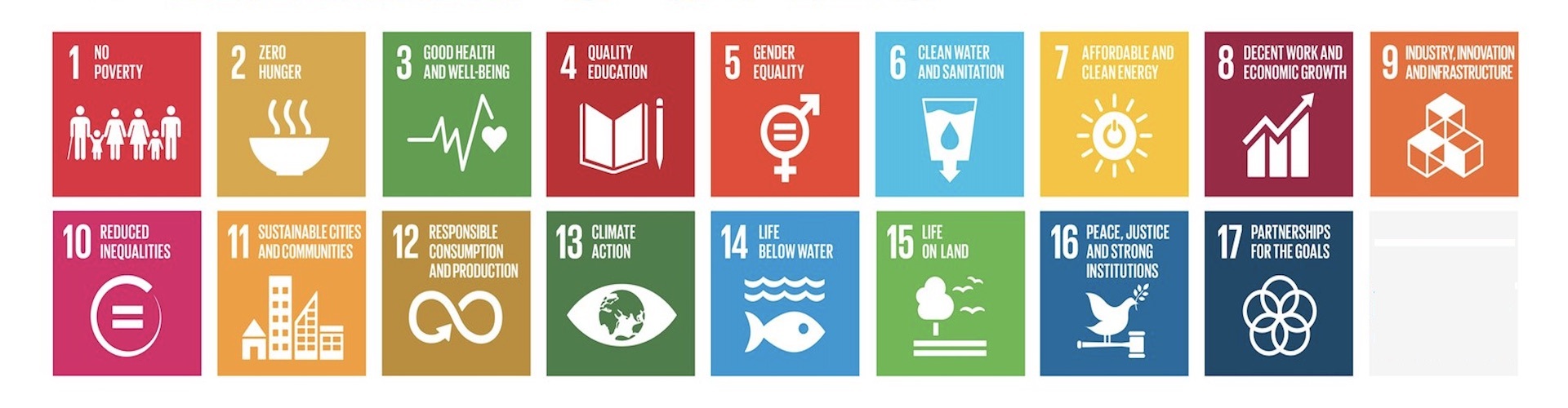
Dorothée references the Better Business, Better World report where business opportunities and new value pools derived from the Sustainable Development Goals (SDGs) are identified to the tune of $12 trillion. Opportunities are wide-ranging, from food & agriculture and cities, to energy & materials, and health & wellbeing.
What should you do if you want your business to align with best practice in sustainability? Where do you start and who do you go to? There’s no single answer but by listening to this episode you’ll have a better idea of what your next step should look like.
Full episode notes and additional resources are available at Lidji.org
Wednesday Apr 03, 2019
Wednesday Apr 03, 2019
CEO of ActionAid UK, Girish Menon, joins Alberto Lidji on “International Women's Day” to talk about improving the lives of girls and women globally.
Learn and be inspired by the candid observations of Girish Menon, CEO of ActionAid UK. If you ever wondered how international development organisations actually work and what it takes to be a CEO in a complex organisational landscape -- where lives truly are on the line -- you'll enjoy this episode and take away several key pointers.
The Do One Better! podcast is hosted by Alberto Lidji, former Global CEO of the Novak Djokovic Foundation, and aims to inspire listeners to be more philanthropic, to think more about sustainability and to embrace social entrepreneurship. Full episode notes and additional resources are available at Lidji.org
Wednesday Apr 03, 2019
Wednesday Apr 03, 2019
Marks & Spencer’s Director of Sustainable Business, Mike Barry, joins Alberto Lidji to share key trends in sustainability and identify “the single most important, most profound change”.
Mike Barry is a trailblazer in the world of sustainability and leads sustainability at M&S, one of the world's great food and clothing retailers.
We hear him explain how “just making old capitalism less bad ain’t good enough” and gain invaluable insight as he clinically points out “the most important things that a Marks & Spencer's can do" to make the most difference in reducing carbon footprint. The shareholder base is definitely more energised and rest assured, disruption is coming!
The Do One Better! podcast is hosted by Alberto Lidji, former Global CEO of the Novak Djokovic Foundation, and aims to inspire listeners to be more philanthropic, to think more about sustainability and to embrace social entrepreneurship. Full episode notes and additional resources are available at Lidji.org
Wednesday Apr 03, 2019
Wednesday Apr 03, 2019
Managing Director of the Jacobs Foundation, Sandro Giuliani, joins Alberto Lidji to shed light on how their $7bn endowment and strategic operations improve the lives of children and youth globally.
If you ever wondered how global philanthropy works, this is the episode for you. Sandro Giuliani, Managing Director of the Jacobs Foundation, explains what it takes to achieve long-term, sustainable, system-wide change and sheds light on co-funding, intellectual partnerships, impact investing and private/public partnerships.
The Jacobs Foundation has a $7bn endowment, a robust portfolio of philanthropic initiatives, and strategic partnerships with global foundations, national and local governments, and several of the world's leading academic centres of excellence, including Berkeley, MIT, Wharton and Oxford. They drive knowledge and research forward through an incredible Fellowship program and, ultimately, focus on children and youth.
The Do One Better! podcast is hosted by Alberto Lidji, former Global CEO of the Novak Djokovic Foundation, and aims to inspire listeners to be more philanthropic, to think more about sustainability and to embrace social entrepreneurship. Full episode notes and additional resources are available at Lidji.org
Wednesday Apr 03, 2019
Wednesday Apr 03, 2019
The Chair of Ernst & Young’s EY Foundation, Patrick Dunne, joins Alberto Lidji to talk social entrepreneurship, impact, employability, education in Africa and helping disadvantaged youth.
Patrick Dunne is Chair of Ernst & Young's EY Foundation and Chair of ESSA (Education Sub Saharan Africa), as well as being a serial social entrepreneur. Hear his personal story and learn from his business experience -- a journey from humble beginnings that has led to leadership positions at some truly remarkable philanthropic organisations and social enterprises.
Clarity of purpose, getting the right people and appointing first-time CEO’s – he shares plenty of tips for you to take away.
If you’re at all interested in diverse social enterprise models; helping children and young adults from disadvantaged backgrounds break through and running programs in sub-Saharan Africa, this episode is for you.
The Do One Better! podcast is hosted by Alberto Lidji, former Global CEO of the Novak Djokovic Foundation, and aims to inspire listeners to be more philanthropic, think more about sustainability and embrace social entrepreneurship. Full episode notes and additional resources are available at Lidji.org